Vietnam Family Travel: Itineraries, Costs and Ages Guide
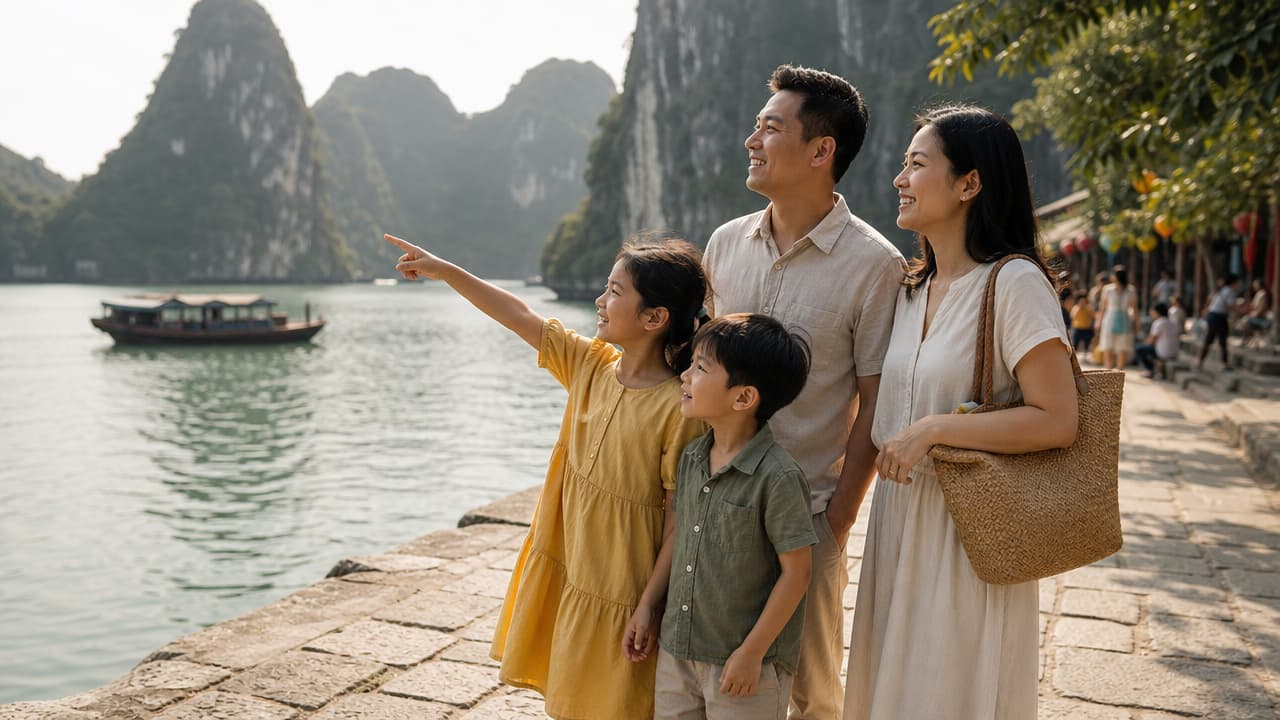
Yes — Vietnam is an excellent choice for family travel, and this guide organizes everything by budget, trip length, and child age so you can plan with confidence. Vietnam family travel works because the country blends culture, adventure, relaxation, and famously friendly locals into a single, remarkably affordable trip. Travelers report luxury hotels for around $50 a night with buffet breakfast included, delicious meals for roughly $4, and short taxi rides for about $15. Whether you are traveling with toddlers, teens, or grandparents, the pieces fit together with the right planning.
Is Vietnam Good for a Family Vacation? The Short Answer
Vietnam is safe, affordable, and rich in kid-friendly culture, food, and adventure. It is currently a welcoming destination for American and international travelers alike, with a reputation for warm hospitality toward families and children.
The appeal is easy to summarize. You get culture in Hanoi's old quarter and Hoi An's lantern-lit streets, adventure in Halong Bay's caves and Ninh Binh's rice fields, and relaxation on central and southern beaches — all in one country. Families consistently describe it as one of their best trips together precisely because it stretches everyone's comfort zone in a gentle, rewarding way.
For multigenerational groups, Vietnam is equally kind. Slow river cruises, comfortable private cars, and unhurried village visits make it as suitable for grandparents as it is for grandchildren. The low cost of comfort means even a relaxed, well-served itinerary rarely feels extravagant.
How Much Does a Family Trip to Vietnam Cost?
Vietnam is one of the best-value destinations in Asia, which is why so many families ask exactly how far their money will stretch. The honest answer depends on your travel style. Below is a realistic daily on-the-ground estimate for a family of four (two adults, two children), excluding international flights.
| Travel style | Daily cost (family of four) | What it looks like |
|---|---|---|
| Budget | $80–$130 | Guesthouses and family rooms, street food and casual meals (~$4 each), local trains and shared transfers |
| Mid-range | $150–$300 | Comfortable 3–4 star hotels (~$50/night), a mix of restaurants, occasional private driver, an overnight Halong cruise |
| Luxury | $400–$800+ | Boutique and 5-star stays, private guides and drivers throughout, premium cruises and curated experiences |
Is $2000 enough for two weeks in Vietnam?
For a couple or a small family traveling budget-to-mid-range, $2000 covers two weeks of on-the-ground costs comfortably — accommodation, food, local transport, and plenty of activities. It will not stretch to luxury hotels and private guides every day, and it does not include international airfare. But for a rich, comfortable trip, it is genuinely workable.
Is $1000 enough for two weeks in Vietnam?
For a budget-minded family staying in guesthouses, eating local food, and using trains and shared transport, $1000 over two weeks is tight but possible for on-the-ground spending. Add a splurge like an overnight cruise or a private driver and you will exceed it quickly. Treat $1000 as the floor, not the target.
Line items to budget separately
- International flights: your single biggest cost, varying widely by origin and season.
- Internal transport: domestic flights between north, central, and south save days of travel; trains and private cars fill in the gaps.
- Private guides and drivers: the most valuable upgrade for families, turning logistics into ease.
- Halong Bay cruise: usually priced per cabin or per person and worth planning around.
Best Vietnam Family Itineraries by Trip Length
Vietnam rewards both short escapes and full-country adventures. Here are three proven frameworks, from a one-week northern loop to a two-week grand tour.
| Trip length | Route | Best for |
|---|---|---|
| 7 days | Hanoi → Halong Bay → Ninh Binh | First-timers, limited leave |
| 10 days | Hanoi → Halong Bay → Ninh Binh → Hoi An/Da Nang | Balanced culture and coast |
| 2 weeks | North → Central → South (HCMC/Mekong or beach) | Grand tour, older kids |
7 Days: North Vietnam Highlights
A tight, satisfying loop that suits first-timers and families with limited leave. Base in Hanoi to explore the old quarter, water-puppet theatre, and street-food scene, then head to Halong Bay for an overnight cruise among the limestone karsts. Finish in Ninh Binh, sometimes called "Halong on land," for boat rides through rice fields and easy cave visits. Our Vietnam destination page maps out how these northern stops connect.
This route keeps travel distances short and avoids domestic flights, which is ideal when you want maximum experience with minimum logistics.
10 Days: Classic North-to-Central Route
Add a flight south for a fuller picture. Spend three to four days in and around Hanoi, take an overnight Halong Bay cruise, visit Ninh Binh, then fly to Hoi An or Da Nang for lantern-lit old-town evenings, tailor shops, cooking classes, and beach time.
Ten days is enough to sample distinct regions without rushing. One American family documented a ten-day trip that even reached Ho Chi Minh City, praising just how far a modest budget went — $50 hotels, $4 meals, and cheap taxis throughout.
2 Weeks: North, Central & South Combined
Two weeks lets you connect all three regions. Begin in the north (Hanoi, Halong Bay, Ninh Binh), move to central Vietnam (Hue and Hoi An), then finish in the south with Ho Chi Minh City and a Mekong Delta day trip — or trade the city for pure beach relaxation.
This is the format one family of four used, traveling with children aged 9 and 12 on return flights from Melbourne to Hanoi, and it ranked among their best trips ever. Two weeks gives breathing room for slower mornings, which matters when you are traveling with kids or grandparents.
Planning by Child Age: Toddlers to Teens
Most guides describe one family's diary or a single fixed tour. The more useful lens is your children's ages, because that determines pacing, activities, and what will actually delight them. Our step-by-step guide to planning a family trip walks through this age-first approach in more detail.
Traveling with toddlers
Build the day around naps and shade. Choose hotels with pools, keep transfers short, and favor Ninh Binh and Hoi An over long multi-stop days. Vietnamese food is toddler-friendly — plain rice, noodles, fresh fruit, and mild pho are everywhere. Strollers struggle on uneven old-town lanes, so a soft carrier is often easier.
Primary-age kids
This is a sweet spot for Vietnam. Kids this age love biking through the rural villages and rice fields near Ninh Binh, and kayaking and exploring caves in Halong Bay — exactly the hands-on adventure family-travel specialists highlight for this stage. They are old enough to walk full days but still enchanted by water puppets and lantern-making.
Teens
Teenagers respond to challenge and story. Layer in cave kayaking, cycling tours, cooking classes in Hoi An, and the history of Hue and the Cu Chi Tunnels. Give them a camera or a small planning role and the trip becomes theirs.
Multigenerational travel
Traveling with grandparents? Slow the pace, choose ground-floor or lift-served rooms, use private cars instead of trains for comfort, and pick a comfortable cruise cabin. River and bay cruising, gentle village walks, and unhurried meals let three generations share the same experience at their own comfort level — a natural fit for our family holidays designed for families and seniors who want ease without sacrificing wonder.
Top Family-Friendly Things to Do in Vietnam
The magic of Vietnam is how easily it combines culture, adventure, and relaxation. A well-balanced family itinerary usually includes several of these:
- Halong Bay overnight cruise: sleep among the karsts, kayak still waters, and explore caves — a highlight for kids and adults alike.
- Biking the rice fields near Ninh Binh: flat, scenic cycling past villages, plus rowboat rides through cave-pierced waterways.
- Hoi An lantern town and cooking classes: lantern-lit evenings, tailor visits, and hands-on Vietnamese cooking the whole family can join.
- Northern farming villages: authentic countryside visits that show daily rural life beyond the cities.
- Beaches for downtime: Da Nang and central-coast beaches provide the relaxation that keeps a two-week trip sustainable.
The aim is rhythm — an active day of caves and kayaks followed by a slow beach or pool day keeps everyone happy. For thrill-seeking families, our adventure trips pair vetted guides with boutique comfort.
Practical Tips: Health, Food, Getting Around & When to Go
Food and picky eaters
Vietnamese cuisine is fresh, varied, and kid-approachable. Stick to busy, popular spots, choose freshly cooked hot food, and drink bottled or filtered water. Rice, noodles, spring rolls, and mild pho suit cautious eaters, while adventurous kids can graze the markets.
Getting around with kids
Domestic flights connect the north, central, and south quickly and cheaply, saving precious holiday days. Overnight and scenic trains are memorable but slower. For families, a private driver and guide are the single best investment — no navigating stations with tired children, and flexibility to adjust the day.
Best time to visit by region
Vietnam spans several climates, so timing depends on your route. Broadly, spring (March–April) and autumn (September–November) offer the most balanced weather across the country. The north is cooler in winter, while central Vietnam is best avoided during the peak rainy months. A planner can sequence your regions to chase the best conditions.
Safety and packing
Vietnam is a safe, welcoming destination for family travelers right now. Pack light, breathable clothing, sun protection, a soft carrier for toddlers, any regular medications, and slip-on shoes for temples and homes. Beyond that, keep it minimal — you can buy almost anything you forget, inexpensively.
DIY vs Tour vs Tailor-Made: Choosing How to Travel
Once you know your budget, itinerary, and your children's ages, one decision remains: how to actually book it. There are three broad paths, each with real trade-offs.
| Approach | Cost | Flexibility | Effort & stress | Best for |
|---|---|---|---|---|
| Self-planned (DIY) | Lowest | Total | Highest — you handle every booking | Confident, flexible travelers with time to research |
| Fixed group tour | Moderate | Low — set dates and route | Low, but you follow the group's pace | Families who like ready-made structure and company |
| Tailor-made itinerary | Moderate to high | High — built around you | Low — a specialist handles logistics | Families and seniors wanting comfort with personalization |
DIY saves money but demands hours of research and carries the risk of a mistimed connection with kids in tow. A fixed group family holiday — such as a 13-day scheduled tour — removes planning stress but locks you into set dates, a set route, and other people's pace, which rarely matches a toddler's nap or a teen's interests. Here is why curated journeys beat fixed departures for families.
Tailor-made planning is the smart middle path. Specialists like Scott Dunn and Audley build private, flexible itineraries — and so does Pushpakka Vimana Voyages. You keep the freedom of DIY without the workload, get private guides and drivers sized to your family, and pace the trip around your children's ages and your grandparents' comfort. The trade-off you avoid is the biggest one: stress.
Plan Your Family Journey to Vietnam
Vietnam gives families culture, adventure, relaxation, and extraordinary value in a single trip — and a thoughtfully designed itinerary turns all of that into ease. Whether you have seven days or two weeks, toddlers or teens, or three generations traveling together, the difference between a good trip and a seamless one is in the planning.
As your partner in mystical journeys, Pushpakka Vimana Voyages designs customized, comfortable family itineraries tailored to your pace, interests, and budget. Contact us to start crafting a Vietnam adventure your family will remember for a lifetime.
Frequently Asked Questions
Is $2000 enough for two weeks in Vietnam?
Yes, for budget-to-mid-range travel, $2000 covers two weeks of on-the-ground costs for a small family or couple, including accommodation, food, local transport, and activities. It excludes international flights and will not stretch to daily luxury.
Is $1000 enough for two weeks in Vietnam?
It is tight but possible for a budget family staying in guesthouses, eating local food, and using trains or shared transport. Add cruises or private drivers and you will exceed it, so treat $1000 as a floor.
Is it safe for Americans to travel to Vietnam right now?
Yes. Vietnam is currently a safe and welcoming destination for American and international travelers, with a strong reputation for friendliness toward families.
How much does a family trip to Vietnam cost?
On the ground, expect roughly $80–$130 per day for budget travel, $150–$300 for mid-range, and $400+ for luxury for a family of four, plus international flights. Vietnam's low prices — $50 hotels, $4 meals, $15 taxis — keep comfort affordable.
What is the best age to take kids to Vietnam?
Vietnam works at every age, but primary-age children (around 6–12) hit the sweet spot: old enough for biking, kayaking, and caves, yet still enchanted by lanterns and water puppets. Toddlers and teens both thrive with the itinerary tuned to them.
How many days do you need in Vietnam with kids?
Seven days covers the northern highlights, ten days adds central Vietnam and beaches, and two weeks lets you combine north, central, and south comfortably. More time means a slower, more family-friendly pace.
Begin your Journey
Share what you have in mind, and a member of our curation team will be in touch within 24 hours to start composing the trip that could only ever be yours.
