Family Travel in India: A Guide for Every Kind of Family
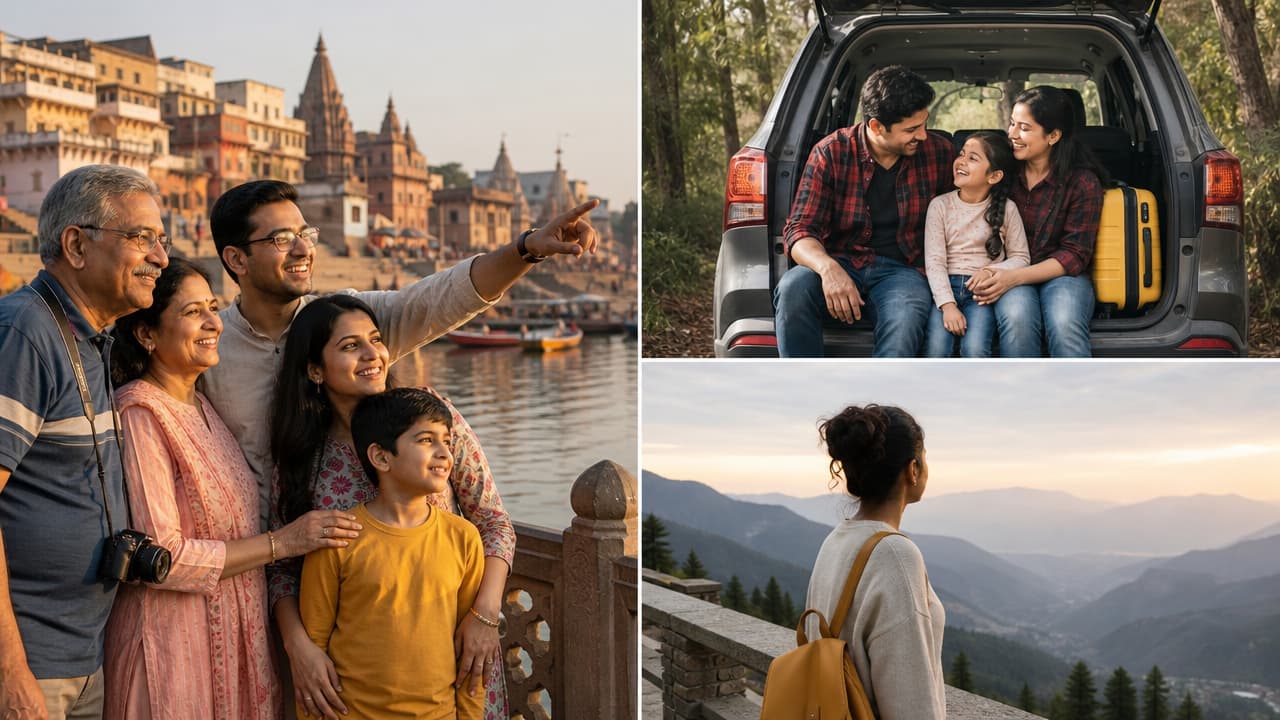
Yes, family travel in India is absolutely worth it, provided you plan slowly, focus on one region, and match the trip to how your family actually likes to travel. India rewards families with more colour, history, and warmth than almost anywhere on earth, but it rarely rewards a rushed, over-packed schedule. This guide breaks the planning down by family type, pairs each with concrete region-based itineraries, and shows you a done-for-you path when you would rather have every detail handled.
Most guides on this topic are written for young Western backpacking families. That is only one kind of traveller. Whether you are a retired couple travelling with grandchildren, a family with a baby, or an independent explorer chasing hidden gems, the advice below is tailored to you.
Is India Good for a Family Trip? The Short Answer
India has a reputation for challenging travel, and seasoned family bloggers do not hide it. Travellers describe it as "hard work" and warn that the sensory intensity can overwhelm younger children if you try to see too much. That reputation is fair, but incomplete.
The same families who call it demanding also call it transformative, one describing visiting India with kids as "seeing a whole new world through different eyes." The difference between an exhausting trip and an extraordinary one comes down to structure.
Three principles turn India from daunting into deeply rewarding:
- Focus on one region. Do not try to string together the whole country. Pick Rajasthan, or Kerala, or the Golden Triangle, and go deep.
- Allow 10 to 14 days. Enough time to slow the pace, absorb each place, and build in rest days.
- Match the trip to your family type. A multi-generational group has different needs than a family with a toddler or an adventure-seeking couple with teens.
Get those three right and India with kids stops being a gamble and becomes one of the most memorable journeys your family will ever take. If you want a broader primer first, our step-by-step guide to planning a family trip covers budgets, destinations, and pacing across the board.
Best Places for a Family Trip in India
The single most useful decision you can make is to stay in one state and explore just a couple of cities, villages, or national parks. As one responsible-travel guide puts it, staying put in one region lets you slow down instead of spending your holiday in transit. Here are the regions that work best for families.
Rajasthan
Rajasthan is the storybook India of forts, palaces, and desert colour. Children are captivated by the scale of the hilltop fortresses, camel encounters, and bustling bazaars. It is also home to Ranthambhore National Park, where a tiger safari becomes the highlight of any young traveller's trip. Many families stay in converted fort and palace hotels, which double as an attraction in themselves.
The Golden Triangle
Delhi, Agra, and Jaipur form the classic Golden Triangle and remain the best first-timer route. In Delhi your family can explore centuries of history at the Red Fort, Qutub Minar, and Humayun's Tomb, then ride a rickshaw through the lanes of Old Delhi. Agra delivers the Taj Mahal, ideally visited early to beat the crowds, while Jaipur brings the pink-hued palaces and hilltop forts of Rajasthan within easy reach.
Kerala
If you want calm, choose Kerala. The palm-lined backwaters, houseboat cruises, and gentle pace make it ideal for families who want India's beauty without its intensity. It pairs beautifully with a busier northern region as a restful second leg.
Goa
Goa is the country's easiest beach downtime. Warm shallow water, relaxed resorts, and a slower rhythm make it a natural place to end a trip after the sensory richness of the cities.
Comfort-first cities
If your priority is ease and familiarity, southern cities like Chennai and Bengaluru, along with the coastal town of Puducherry, offer comfortable bases with good infrastructure and a gentler introduction to the country.
Matching the Trip to Your Family Type
This is where most guides fall short. "Family" is not one traveller. A trip built for a backpacking couple with a toddler will frustrate a group of grandparents, and a polished luxury itinerary can feel stifling to an independent explorer. Below, the advice is segmented by the three family types we plan for most often, the same segments behind our tailored family holiday itineraries.
Multi-Generational & Senior-Friendly Trips
When grandparents, parents, and children travel together, comfort and pace matter more than mileage. The goal is an enriching cultural experience that never leaves anyone exhausted.
- Use private guided transfers, not trains. A private driver and air-conditioned vehicle gives you door-to-door comfort, flexibility to stop when someone needs a break, and no wrestling luggage through crowded stations.
- Stay in heritage hotels. Sleeping in a converted fort or countryside palace is an experience in itself, and these properties typically offer the space, service, and calm that older travellers appreciate.
- Slow the pace. Plan one major sight per day with unhurried mornings and rest built in. Prioritise accessible, well-maintained cultural sites over anything that demands long walks on uneven ground.
- Book private guides. A knowledgeable local guide brings history alive for every generation and adjusts the tempo to the group, rather than the group chasing a fixed tour schedule. This is exactly why curated journeys beat fixed departures for mixed-age groups.
A Rajasthan or Golden Triangle route, spread over 10 to 12 days with heritage stays and a private driver throughout, is the sweet spot for multi-generational groups. Travellers weighing similar routes elsewhere in Asia often compare our multi-generational family travel guide for structuring pace across generations.
Families With Young Kids & Babies
India is genuinely magical for children, but the golden rule from experienced family travellers is simple: do not cram too much in. India can be a sensory overload for little minds, and every family member needs time to process what they are seeing. Fewer places, more days.
The activities children love most are easy to build in: a tiger safari in Ranthambhore, a rickshaw ride through Old Delhi, a houseboat night on the Kerala backwaters, and feeding time at a spice farm or elephant sanctuary. These give kids anchors of excitement between the cultural sights.
Food and health precautions deserve real attention when travelling with young children:
- Drink only sealed bottled or filtered water, and use it for brushing teeth.
- Stick to freshly cooked, hot food and peelable fruit; be cautious with raw salads, ice, and street food for the youngest travellers.
- Carry rehydration salts and any prescribed medication in your day bag.
- Consult your doctor about recommended vaccinations well before you travel.
Travelling to India with an infant: a packing checklist
If you are travelling with a baby, pack for both hygiene and heat:
- Lightweight, breathable cotton clothing and a sun hat
- Baby-safe sunscreen and insect repellent
- A comfortable baby carrier for uneven streets and stairs (easier than a stroller in most cities)
- Ample formula, familiar snacks, and sterilising equipment
- Plenty of nappies and biodegradable wipes; supply of preferred brands can be inconsistent
- Rehydration sachets, a thermometer, and a basic first-aid kit
- A mosquito net for the cot and a portable blackout cover for naps
- Copies of medical records and your doctor's contact details
Choose accommodation with reliable air conditioning and request a cot in advance, and keep your daily plan light so the baby's routine stays intact.
Independent & Adventure-Seeking Families
For families who want hidden gems and authentic culture rather than a polished set-piece tour, India delivers in spades. The key is balancing spontaneity with a loose framework so you keep the freedom to wander without the stress of unsolved logistics.
- Mix cities with rural areas. Pair a couple of vibrant cities with village stays and national parks to feel the real texture of Indian life.
- Choose village and homestay experiences. Staying with a local family or in a rural guesthouse gives teenagers and curious kids the kind of authentic connection no hotel can match.
- Build in national parks. Beyond Ranthambhore, wildlife reserves reward families who like the outdoors and are happy to travel further off the standard circuit. Active families often pair these with our adventure trips for treks and wildlife.
- Keep the itinerary loose. Lock in your key stays and transfers, then leave open days for the discoveries you cannot plan in advance.
A tailor-made trip suits this group best precisely because it can be built as a flexible skeleton rather than a rigid schedule, giving you support behind the scenes and freedom on the ground.
How Many Days You Need & Sample Itineraries
Plan for at least 10 days, and ideally closer to two full weeks. With ten days you can do one region well; with two weeks you can combine a cultural region with a restful one and still keep the pace humane. Anything shorter forces the kind of rushing that makes India feel overwhelming.
7-Day Golden Triangle (first-timers, short on time)
- Days 1–2, Delhi: Red Fort, Qutub Minar, Humayun's Tomb, and a rickshaw ride through Old Delhi, with time to recover from the flight.
- Day 3, Delhi to Agra: Private transfer, afternoon at leisure.
- Day 4, Agra: Sunrise at the Taj Mahal, then Agra Fort.
- Days 5–6, Jaipur: Amber Fort, City Palace, and the bazaars; a hands-on activity such as block printing for the children.
- Day 7, Jaipur to Delhi: Return transfer and departure.
14-Day Rajasthan & Kerala (culture then calm)
- Days 1–2, Delhi: Ease in with the capital's headline sights.
- Day 3, Agra: The Taj Mahal early, then onward.
- Days 4–5, Ranthambhore: Two tiger safaris and downtime at a jungle lodge.
- Days 6–8, Jaipur: Forts, palaces, and a heritage-hotel stay.
- Day 9, fly south to Kochi: Domestic flight, evening at leisure.
- Days 10–11, Kochi & backwaters: A houseboat night on the Kerala backwaters.
- Days 12–13, Kerala coast or hills: Beach or a tea-country retreat.
- Day 14: Departure.
These are frameworks, not fixed rules. The right number of stops depends entirely on your family type, which is exactly why we build each itinerary to order. If you are also weighing other regional options, our Vietnam family travel guide lays out comparable 7-, 10-, and 14-day structures.
What a Family Trip to India Costs
Cost depends far more on travel style than on the country itself. India can be done on a shoestring or as a genuinely luxurious tailor-made journey, and a family trip can sit anywhere along that spectrum.
| Travel style | Approx. per person, 7 days | What's included |
|---|---|---|
| Budget / independent | Lower end | Guesthouses, trains and shared transport, self-guided sightseeing |
| Comfort / mid-range | Mid-range | Good 4-star hotels, private driver, some guided days |
| Tailor-made luxury | Higher end | Heritage and palace hotels, private guides throughout, domestic flights, safaris |
The main drivers of cost are consistent across every trip:
- Private guides and drivers versus public transport
- Heritage and palace hotels versus standard accommodation
- Domestic flights to save time between distant regions
- Special experiences such as tiger safaris and private cultural sessions
Families travelling from the USA should also budget for international flights and factor in the value of a fully managed itinerary, where transfers, guides, and hotels are coordinated so you never have to solve logistics on the road. We build customised packages for exactly this, tailored to your dates, pace, and budget.
Safety, Health & Practical Prep
India is a well-established destination for international families, and with sensible precautions it is a rewarding place to travel. Choosing a reputable operator, staying in vetted accommodation, and using private guided transport all add meaningful peace of mind, especially with children.
Visas
Most visitors, including US citizens, can apply online for an e-Visa before travelling. Apply in good time and make sure every family member's passport has ample validity.
Health
- Consult a travel clinic several weeks ahead about recommended vaccinations.
- Drink only sealed or filtered water and favour freshly cooked, hot food.
- Pack a family first-aid kit with rehydration salts and any regular medication.
- Consider comprehensive travel insurance that covers your whole party.
Best time to visit
The most comfortable window for most of the country is October to March, when the weather is cooler and easier for children and older travellers alike. This is also peak season, so book heritage hotels and safaris well ahead.
Choosing an operator
A trusted, established travel partner handles the details that make India feel effortless: reliable drivers, licensed guides, quality-checked hotels, and support if plans need to change. That is the single biggest factor in turning a challenging destination into a smooth family holiday. You can read more about how we craft bespoke journeys across Asia.
Let Us Plan Your India Family Journey
Every family is different, and your India trip should be too. At Pushpakka Vimana Voyages we craft tailor-made itineraries for seniors and multi-generational groups, families with young children, and independent FIT travellers, matching the pace, comfort, and experiences to exactly who is travelling.
Tell us who is coming, when you would like to travel, and what your family loves most, and we will design a personalised, fully managed itinerary with private guides, hand-picked stays, and seamless transfers. Request your personalised quote and consultation today, and let us turn your family's India journey into a mystical voyage to remember.
Frequently Asked Questions
Which place is best for a family trip in India?
For first-timers, the Golden Triangle of Delhi, Agra, and Jaipur is the best introduction. Rajasthan adds forts, palaces, and tiger safaris, while Kerala offers a calmer, backwater-focused trip. The best choice depends on your family type and pace.
Is it safe for US citizens to travel to India right now?
India is a well-established destination for international families. With an e-Visa, recommended vaccinations, sensible food and water hygiene, and a reputable operator managing transport and accommodation, US families travel there comfortably. Always check current government travel advisories before you book.
How much does a 7-day trip to India cost for a family?
It varies widely by travel style, from budget independent travel at the lower end to tailor-made luxury with heritage hotels, private guides, and domestic flights at the higher end. Key cost drivers are guides and drivers, hotel category, safaris, and internal flights. We can build a package to your specific budget.
Which place in India is most suitable for kids?
Ranthambhore for tiger safaris, Old Delhi for rickshaw rides, Jaipur's forts, and Kerala's backwater houseboats are consistent kid-pleasers. Comfort-first cities like Chennai, Bengaluru, and Puducherry in the south offer a gentler introduction for the youngest travellers.
How many days do you need for a family trip to India?
Plan for at least 10 days, and ideally two full weeks. That gives you enough time to focus on one or two regions, slow the pace, and build in rest days rather than rushing between sights.
What should I pack when travelling to India with an infant?
Pack lightweight cotton clothing, a sun hat, baby-safe sunscreen and insect repellent, a baby carrier, ample formula and familiar snacks, plenty of nappies and wipes, sterilising equipment, rehydration sachets, a thermometer, a mosquito net, and copies of medical records. Choose accommodation with reliable air conditioning and request a cot in advance.
Begin your Journey
Share what you have in mind, and a member of our curation team will be in touch within 24 hours to start composing the trip that could only ever be yours.
